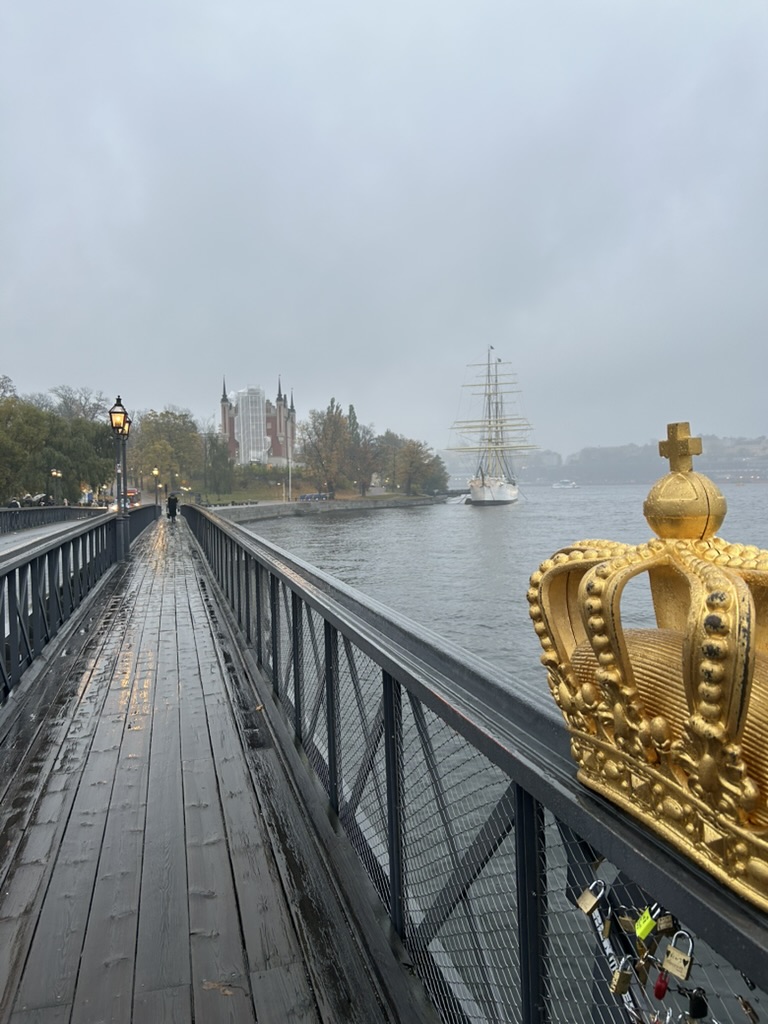
Checked October 2026 · 9 min read
In this guide
- Getting there: from Arlanda to the city
- Getting around
- Where to stay in Stockholm
- How many days in Stockholm: a 1, 3 or 5 day plan
- Gamla Stan, the old town
- Djurgården: Skansen, the Nordic Museum and the Vasa
- Free museum evenings
- The City Hall
- The metro: the world’s longest art gallery
- Fika
- What to eat and drink
- Stockholm, in person
- Field notes: fredagsmys
- When to go
- Who Stockholm suits
- Before you go
- Every place in this guide, on one map
- Questions people ask
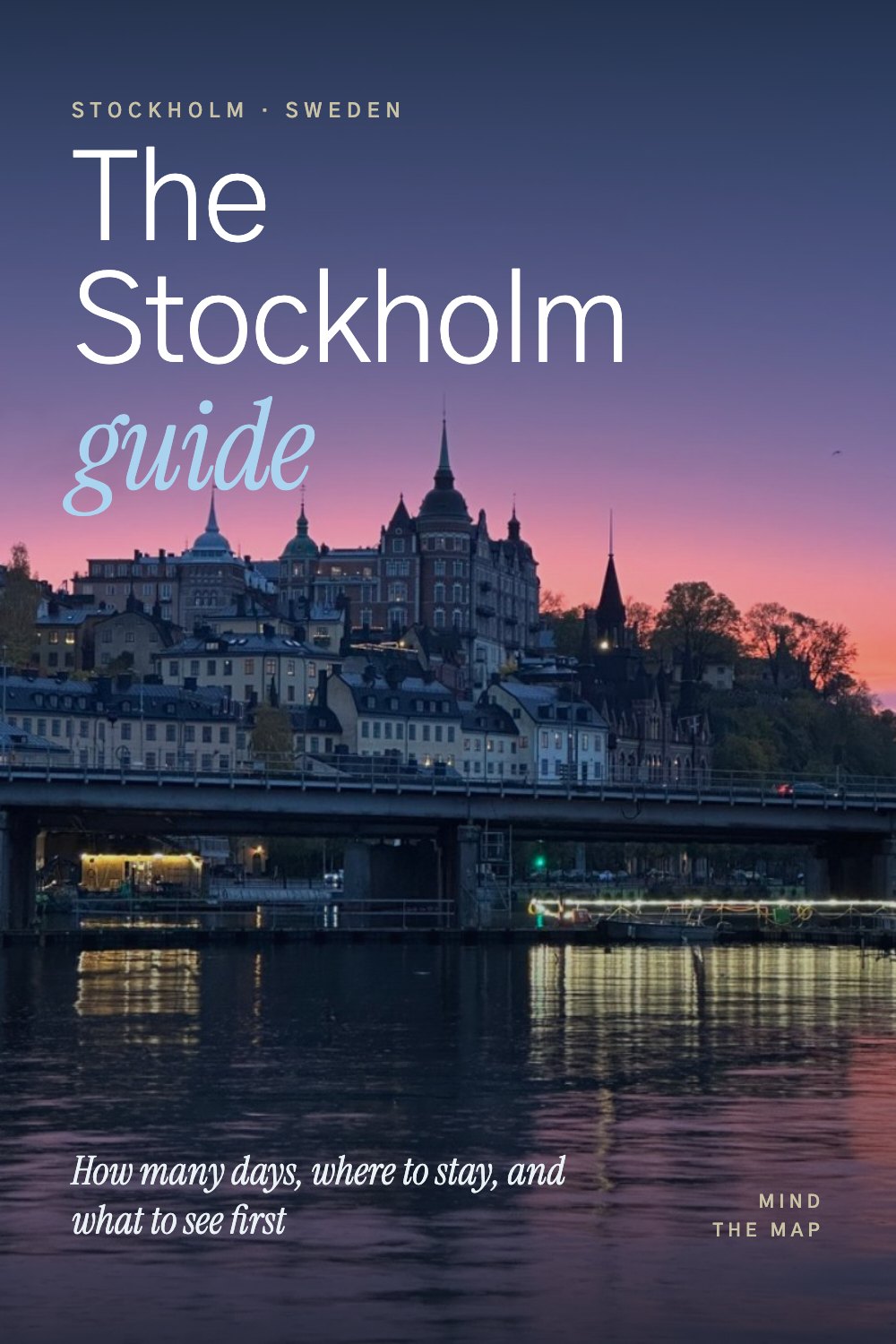
Stockholm is built on fourteen islands where Lake Mälaren meets the Baltic Sea. Every neighbourhood feels like its own small town, joined to the next by a bridge, and the archipelago starts right where the city ends.
This guide covers what a first visit needs: how to get in, where to stay, what to see in one, three or five days, when the big museums are free, what to eat, and the one thing we would never skip.
| How many days | Three nights is the fast version, four is the comfortable one. |
| Where to stay | Norrmalm for convenience, Gamla Stan for atmosphere, Södermalm for value. |
| Don’t miss | The metro art. More than 90 of the 100 stations are decorated, and the entry fee is one ticket. |
| Free evenings | Moderna Museet on Friday 18–20, Nationalmuseum on Thursday 17–20 (spring and autumn). |
Getting there: from Arlanda to the city
Arlanda, the main airport, is about 40 km north of the centre. You have three options:
- Arlanda Express: 18 minutes to Stockholm Central. The fastest, and the most expensive (about 340 SEK one way).
- Flygbussarna: the airport coach to Cityterminalen, about 40–50 minutes, for much less.
- Commuter train (pendeltåg): it looks like the cheap option, but an airport fee is added to the normal ticket. Check the total before you choose it.
Getting around
One SL ticket covers the metro, buses, trams, commuter trains and some ferries. A single ride costs 43 SEK and is valid for 75 minutes. Buy it in the SL app or tap your bank card at the gate. For a three-night stay with a lot of moving around, look at the 72-hour card.
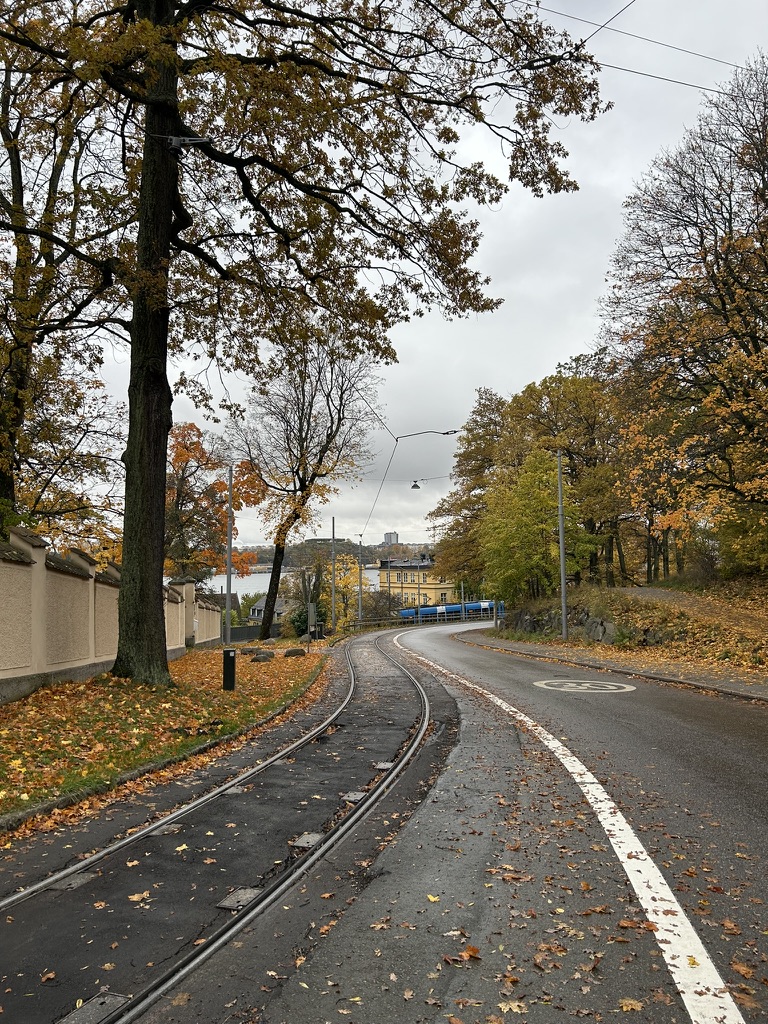
The centre is small enough to walk. Save the metro for longer hops, and take the tram to Djurgården: it runs along the water under the trees.
You will rarely need cash. Almost everywhere takes cards, and some places take nothing else.
Where to stay in Stockholm
- Norrmalm: the modern centre, with Central Station, the airport train and most of the hotels. Practical rather than charming. We stayed here, a few minutes from the station, and arriving and leaving was easy.
- Gamla Stan: the most atmospheric place to wake up. Rooms are smaller and cost more, but you get the old streets early and late, without the day crowds.
- Södermalm: the creative side, with bars, cafés and live music, and usually better value.
- Östermalm: elegant and upmarket, close to the food hall.
- Kungsholmen: quieter, the island with the City Hall.
How many days in Stockholm: a 1, 3 or 5 day plan
One day: stay central. Gamla Stan and the Royal Palace, the King’s official residence with more than 600 rooms. The Vasa Museum. The City Hall courtyard. The metro art at T-Centralen on the way back.
Three days: add Djurgården and the art. Skansen and the Nordic Museum on Djurgården. Östermalms Saluhall. Moderna Museet and Nationalmuseum on the water. An evening on Södermalm. Solna Centrum and Kungsträdgården stations.
Five days: slow down and go further. Fotografiska, Riddarholmen Church and Millesgården, the sculpture garden of Carl Milles. Then a day out of town: Drottningholm Palace, home of the royal family and a UNESCO World Heritage Site on an island in Lake Mälaren; Uppsala, about 40 minutes by train; or Sigtuna, Sweden’s oldest town, about an hour away.
The islands. Stockholm sits at the edge of an archipelago of thousands of islands. Fjäderholmarna is about 30 minutes by boat and Vaxholm about an hour, on an SL ferry with a normal SL ticket.
Gamla Stan, the old town
Stockholm started here, on the small island of Stadsholmen. The first written mention of the city dates from 1252, and the reason was the water: whoever held this narrow passage between the lake and the sea controlled the trade between them.
Stortorget is the oldest square in the city: red and yellow merchant houses and an old well. In November 1520 it was the scene of the Stockholm Bloodbath. The old stock exchange on the square now houses the Nobel Prize Museum, and in December the square holds a Christmas market.
Mårten Trotzigs gränd is a staircase alley and Stockholm’s narrowest street, only 90 cm wide at its tightest point. It is a two-minute stop, best early in the day.
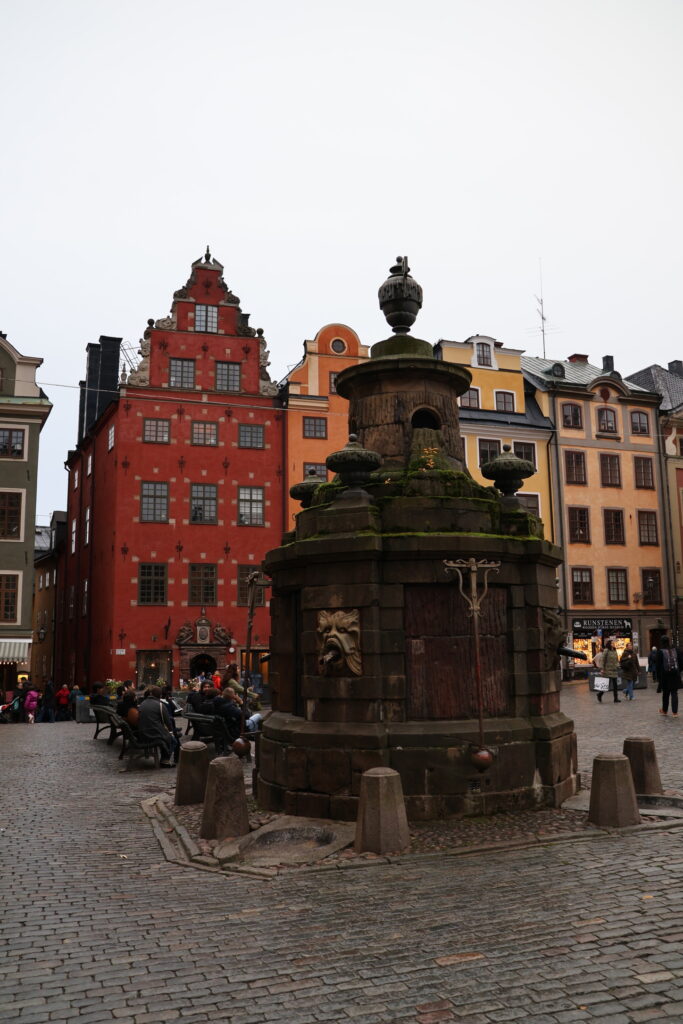
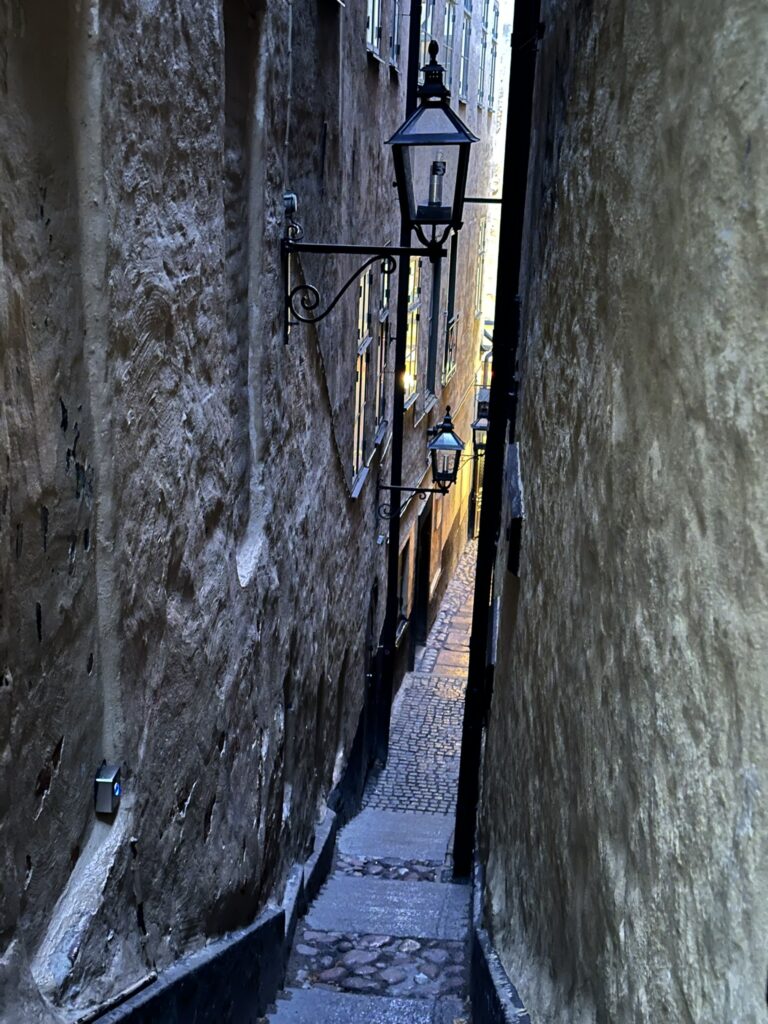
The main streets are busy. One block back, they are not. Give the old town an afternoon without a list.
Storkyrkan, the cathedral
Next to the Royal Palace is Storkyrkan, the oldest church in the city. Inside are a large wooden sculpture of Saint George and the Dragon from 1489 (look at the knight’s blue and yellow plume) and Vädersolstavlan, the sun dog painting: a halo around the sun seen over Stockholm in 1535, one of the earliest images of the city. The version on the wall is a copy from 1636. It is a working church, so check the service times on Sunday mornings.
Djurgården: Skansen, the Nordic Museum and the Vasa
Djurgården is the green island with the big museums. Give it a full day.
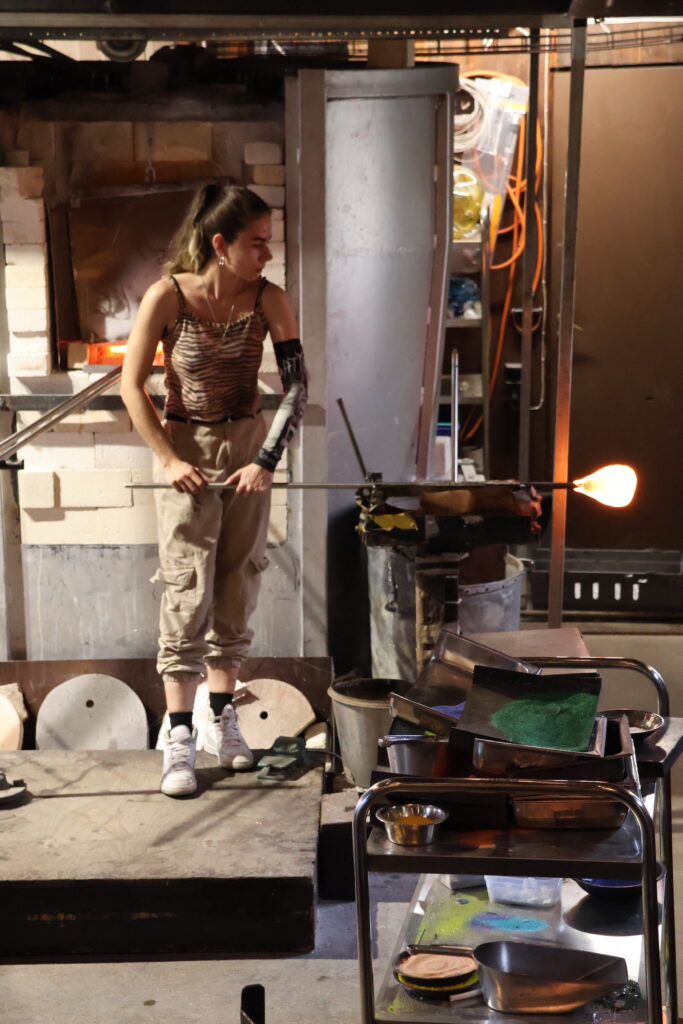
Skansen opened in 1891. Artur Hazelius moved around 150 old buildings here from across Sweden to show how people lived before industry. Craftspeople still work in some of them: we watched glass being blown in an old workshop. From October to December some areas close at 15:00 on weekdays, so arrive in the morning.
Nordiska museet, the Nordic Museum, was also founded by Hazelius, in 1873. The building you see today opened in 1907 and was designed as a palace for ordinary people’s things. Inside is a great hall 126 metres long, with Carl Milles’s oak statue of Gustav Vasa.
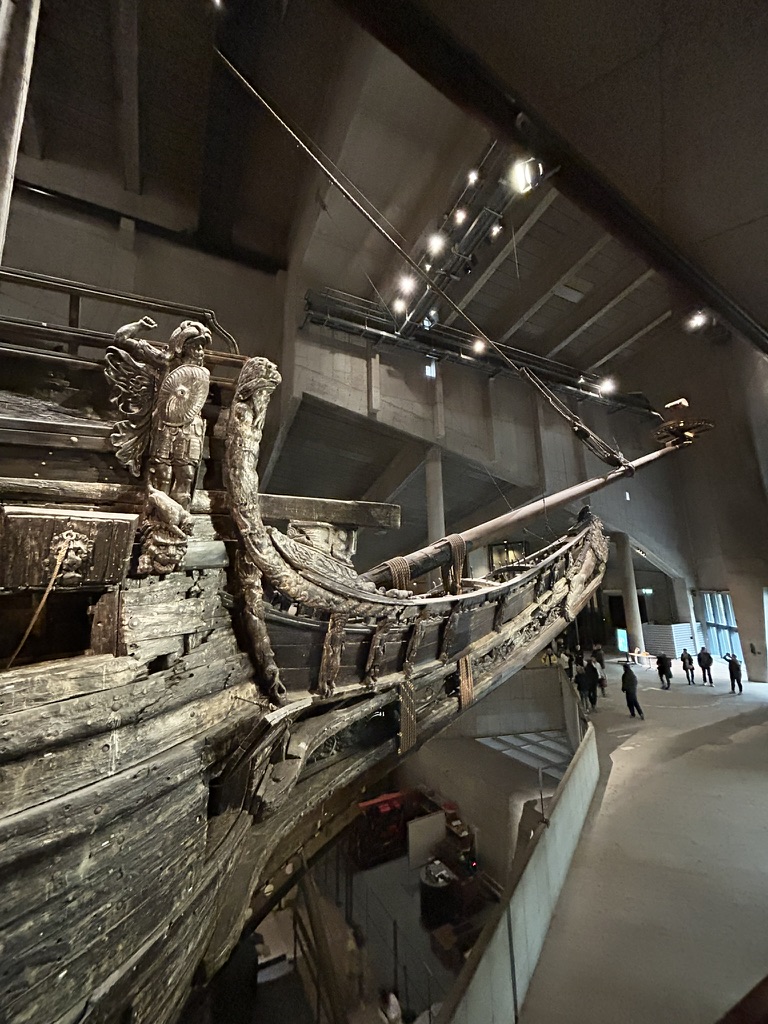
The Vasa Museum is the one museum to pick if you have time for only one. The royal warship Vasa sank on her maiden voyage in 1628, about 1,300 metres out, stayed on the seabed for 333 years and was raised in 1961. More than 98% of the ship is original. Give it two hours, early or late in the day.
Free museum evenings
Two of the big art museums are free one evening a week, in spring and autumn (not in high summer):
- Moderna Museet, Skeppsholmen: free on Fridays 18–20. Normally 170 SEK; under 18 free.
- Nationalmuseum, by the water facing the palace: free on Thursdays 17–20. Normally 160 SEK; under 20 free.
Plan these two evenings first, then build the rest of the days around them.
The City Hall
Stadshuset, on Kungsholmen, is where the Nobel banquet is held every year, in the Blue Hall. The Golden Hall above it is covered in around 18 million mosaic pieces. The courtyard is free to walk into; the halls are by guided tour only, so book ahead if you want to go in.
The metro: the world’s longest art gallery
This is the one we would never skip. Stockholm’s metro has 100 stations, more than 90 of them decorated by over 150 artists. The entry fee is your SL ticket.
- T-Centralen (blue line platform): blue and white climbing leaves, and the silhouettes of the workers who built the metro.
- Solna Centrum: a red sky over a green forest. Look down for the compass in the floor.
- Kungsträdgården: a painted ceiling, a green, red and white floor, and fragments of demolished buildings, remembering the palace that once stood above it.
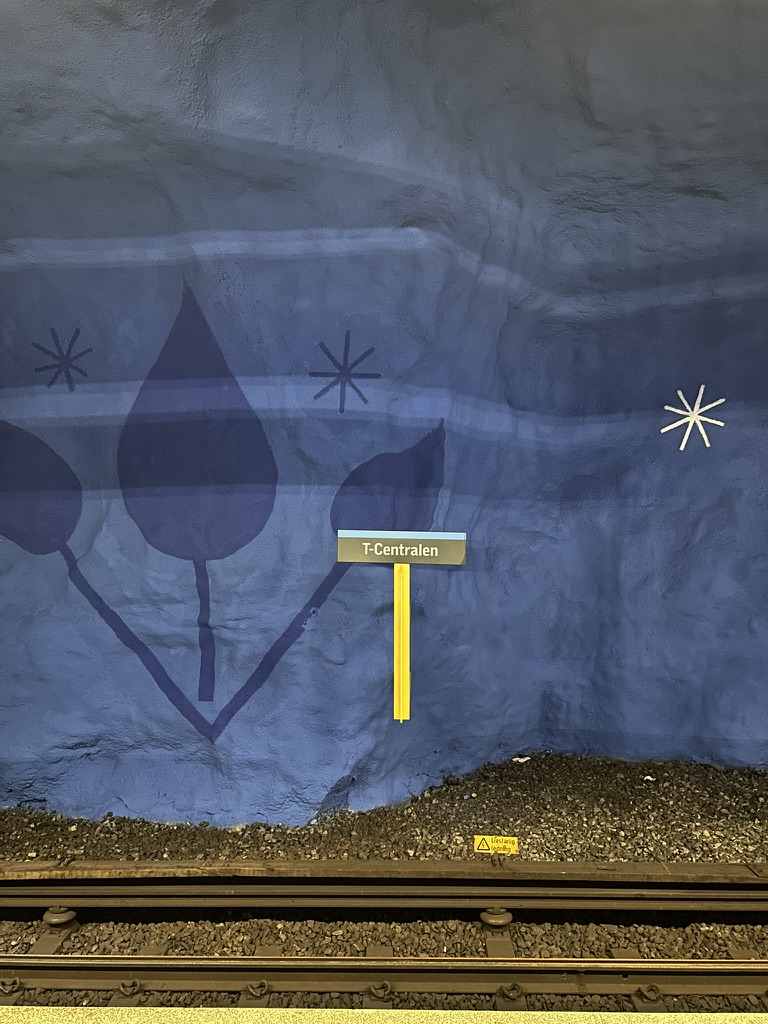
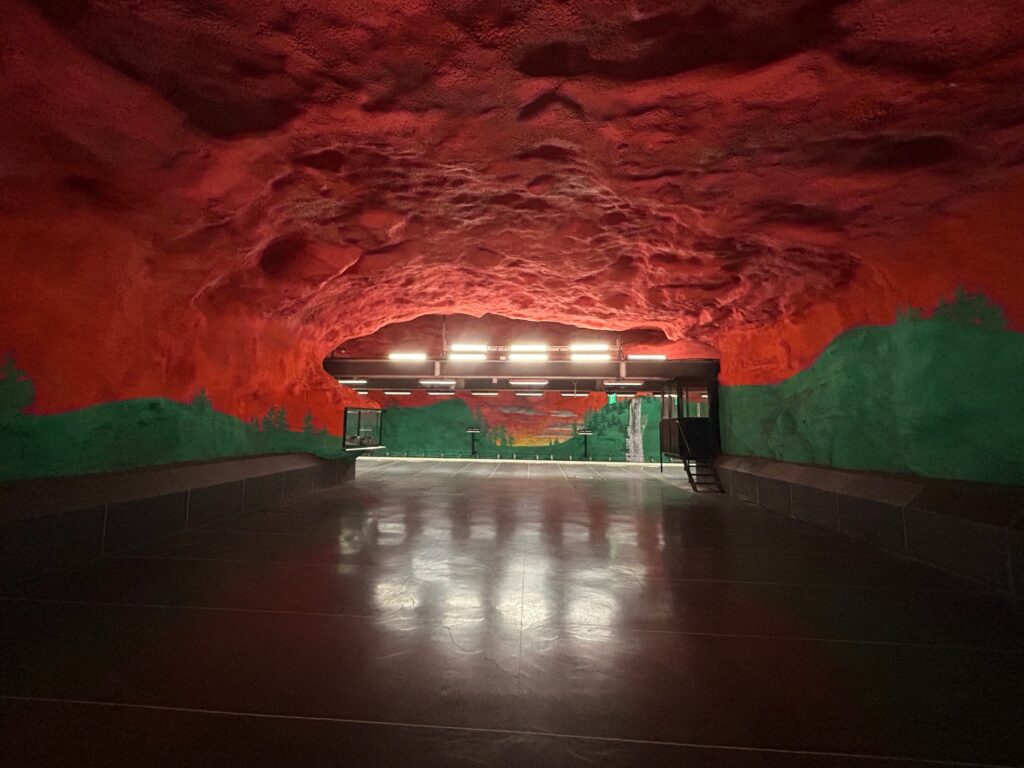
Three more worth the ride: Stadion (rainbow arches, for the 1912 Olympics), Östermalmstorg (Siri Derkert’s walls on women’s rights and peace) and Tekniska Högskolan (science and art). Pick four or five on the same line and ride between them on one ticket.
Fika
Learn one Swedish word before you go: fika. It is a noun and a verb: a break for coffee and something sweet, most often a kanelbulle, the cinnamon bun. The coffee is not really the point. Stopping and sitting down together is. In the dark months, an hour in a warm café in the middle of the afternoon is exactly what the city is built for.
What to eat and drink
- Östermalms Saluhall: the food hall, open since 1888 and restored in 2020. Fish, cheese, bread and small restaurants. Closed on Sundays, early on Saturdays.
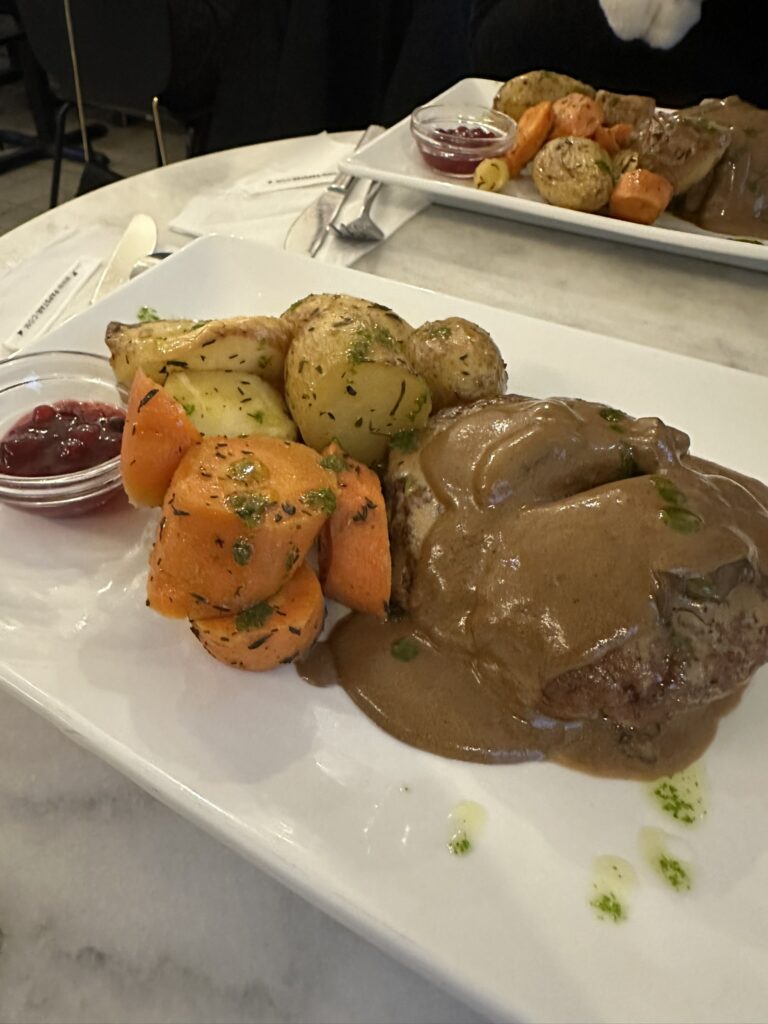
- Dagens lunch: the lunch of the day, the best-value meal in town. At Mom’s Kitchen near the food hall it was 135 SEK; meatballs with cream sauce, potatoes and lingonberries 180 SEK.
- Köttbullar: Swedish meatballs. We would go back to Meatballs for the People on Södermalm.
- Tap water: excellent. Refill your bottle anywhere.
Hernö Gin Bar: order by taste, not by name
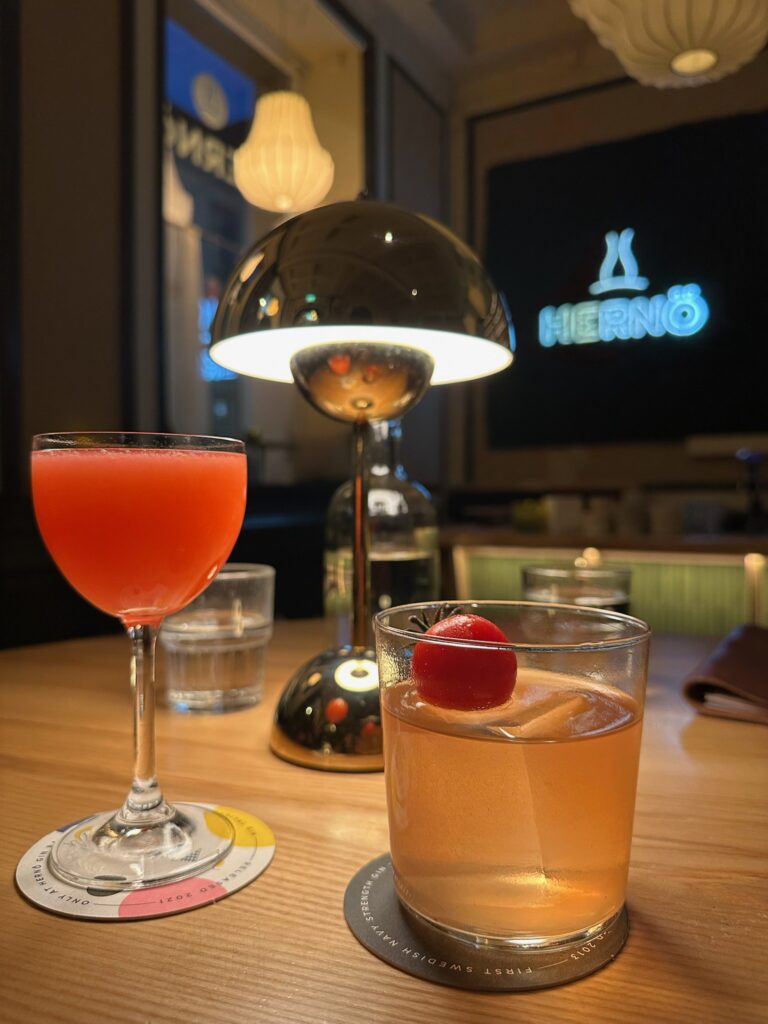
Hornsgatan 1, Södermalm. The menu is a map of tastes, not a list of names:
- The Palette: Sour, Sweet, Bitter, Salt, Umami, Experimental. 182 SEK
- Senses: Smoke, Smooth, Floral, Spice, Boozy, Herbal, Heat. 185 SEK (Heat as a shot, 95 SEK)
Every cocktail is vegan. Someone looks after each table, asks what you like, and steers you from there. The two we still talk about: Experimental (dry gin, saffron, banana, pineapple, coconut) and Dry (Swedish Capital Gin, lingonberry, olive, dry vermouth). Tell the host what you like, order across the palette and share, and leave room for one you would never pick yourself.
Stockholm, in person
The city is easy to be around. People say hej when you walk into a shop and hej hej when you leave. At a café counter or a long bar table, small talk starts before you have found your seat. Ask a question and you get a full, patient answer.
- Card almost everywhere. Many places are card only.
- Tap water is good. Ask for it; it is normal.
- Personal space is respected. Calm queues, no one leans over you. That quiet is part of the warmth.
- Greet the driver. We met the same bus driver twice; the second time he recognised us and welcomed us back.
Field notes: fredagsmys
Friday in Sweden has its own word: fredagsmys, cosy Friday. After the work week, people stay in with family or friends, with tacos (Swedish style, laid out like a buffet), crisps and a film. If the city feels quieter on a Friday night, that is why. If your room has a kitchen, try it yourself.
When to go
- Autumn (October): around 10 °C by day and 5 °C at night, rain on and off, fog on the water, gold leaves and fewer crowds. The clocks go back on the last Sunday of October and sunset jumps to about 16:00: museums in the afternoon, walking in the morning.
- Late November to December: Christmas markets. Skansen’s runs Friday to Sunday only (2026: 27 November to 20 December), and Stortorget has one in December.
Who Stockholm suits
Go if you like museums, walking and water, and want a capital that is calm, clean and easy to get around. Think twice if your trip is all about nightlife on a tight budget: Stockholm is not a cheap city, so lean on dagens lunch, free evenings and the metro art.
Before you go
Times, prices and dates change. Check the official sites before you go: SL, Arlanda Express, the Vasa Museum, Skansen, Moderna Museet, Nationalmuseum and the City Hall tours. This guide was checked in October 2026.
Every place in this guide, on one map
Questions people ask
How many days do you need in Stockholm?
Three nights for the highlights at a fast pace, four to five to add Drottningholm, Uppsala or the archipelago.
What is the best area to stay in Stockholm for a first visit?
Norrmalm for transport, Gamla Stan for atmosphere, Södermalm for value and nightlife.
How do you get from Arlanda to Stockholm?
Arlanda Express (18 minutes), Flygbussarna coach (40–50 minutes), or the commuter train with an extra airport fee.
Do you need cash in Stockholm?
Rarely. Almost everywhere takes cards, and some places are card only.
Which Stockholm museums are free?
Moderna Museet on Friday evenings 18–20 and Nationalmuseum on Thursday evenings 17–20, in spring and autumn.
Is the Stockholm metro worth visiting for the art?
Yes. More than 90 of its 100 stations are decorated, and one SL ticket gets you in. Start with T-Centralen, Solna Centrum and Kungsträdgården.
What Stockholm teaches: friendliness does not have to be loud.
Is Stockholm on your list? Tell us in the comments.
Leave a Reply